Unlocking Zen: How to Dive Deep into Meditation and Why It’s the Ultimate Life Hack!
Introduction
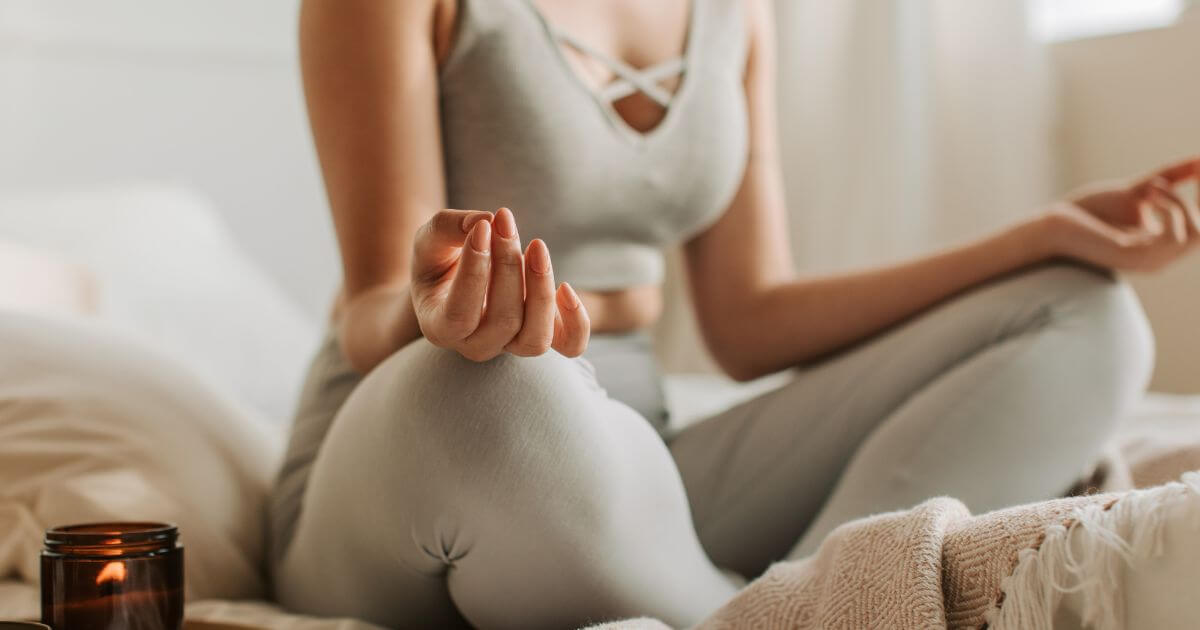
So, you’ve probably heard about meditation, right? That ancient practice where folks sit around, eyes closed, maybe even cross-legged, looking all zen? Or that thing where you hum a bit, and magically all your problems disappear?
Well, not quite.
While it’s not just for monks or those trying to show off on Instagram, it’s also not some woo-woo nonsense. Meditation is like the gym but for your brain. It sharpens your focus, chills out your stress levels, and might even make you feel like you’ve had a couple of wines (without the hangover).
But here’s the kicker: diving deep into that meditative state is where the real magic happens. It’s like comparing a kiddie pool to the deep end.
So, are you ready to dive in and unlock some next-level brain gains? Let’s explore why this can be a game-changer for your mind and soul.
What is a Deep Meditative State?
A deep meditative state isn’t just about closing your eyes, taking a few breaths, and hoping for some magical enlightenment. Nah, it’s way cooler than that. It’s like the VIP lounge of meditation, where your mind stops its incessant chatter and you feel like you’ve had a few glasses of wine (without the regrettable texts to your ex).
Definition and Characteristics of Deep Meditation:
Deep meditation is the rockstar level of inner peace. It’s when you’re so engrossed in the moment that the outside world fades away. Here’s what it feels like:
- Utter Silence: Not just the absence of noise, but a silence of thoughts. Your brain’s usual “What’s for dinner?” or “Did I leave the oven on?” worries? Gone.
- Time Distortion: Ever binge-watched a show and suddenly it’s 3 am? It’s like that, but healthier. Time might seem to fly by or even stand still.
- Physical Disconnection: It’s a sensation where you might not feel your body’s boundaries. Like you’re floating or merging with your surroundings. No, you’re not becoming a ghost; it’s just deep meditation doing its thing.
Differences Between Regular Meditation and Deep Meditation:
Think of regular meditation as dipping your toes in the water, while deep meditation is diving into the Mariana Trench.
- Duration: Regular meditation might be a quick 5-minute breather during lunch. Deep meditation? That’s a dedicated, longer session.
- Awareness: In regular meditation, you’re still somewhat aware of your surroundings. Deep meditation? The world could be ending, and you’d be none the wiser.
- Purpose: While both types aim for relaxation and clarity, deep meditation often has a more profound spiritual or self-discovery goal.
In essence, while your average “Oh, I meditated for 5 minutes during my lunch break” is great (and way better than scrolling through social media), deep meditation is where you unlock the next level of mental clarity and peace. So, ready to dive deeper?
The Science Behind Deep Meditation
Now, for the nerdy part. When you’re in a deep meditation, your brain isn’t just taking a nap or daydreaming about that vacation you’ve been putting off. Nope, it’s working out, flexing its muscles, and undergoing some serious transformation. Think of it as a spa day for your brain, minus the cucumbers on your eyes. Who doesn’t want that?
How the Brain Functions During a Deep Meditative State:
- Brain Waves, Baby!: During deep meditation, your brain shifts from the usual Beta waves (awake and alert) to Alpha and Theta waves. These waves are associated with relaxation, deep learning, and even those “Eureka!” moments.
- The Amygdala Chills Out: That pesky part of your brain responsible for stress, fear, and the “fight or flight” response? It takes a backseat, leading to reduced anxiety.
- Frontal Lobe Goes Offline: The logical, rational, and organized part of your brain decides to take a mini-vacation. This allows for more spontaneous and creative thoughts.
Benefits of Reaching This State:
- Mental Clarity: Ever tried finding your glasses when they’re on your head? That’s your brain in daily life. Deep meditation clears the fog, making things oh-so-crystal-clear.
- Reduced Stress: Remember that Amygdala we talked about? With it chilling out, you feel less stressed, anxious, and more like you’re floating on a cloud. A very peaceful, fluffy cloud.
- Enhanced Creativity: With the frontal lobe taking a break, your brain’s creative side comes out to play. It’s like unlocking a hidden talent you didn’t know you had. Maybe you’re the next Picasso or, at the very least, really good at doodling.
In a nutshell, deep meditation isn’t just some trendy, hipster thing to do. It’s a scientifically-backed method to give your brain the ultimate tune-up. So, the next time someone says meditation is just “sitting there,” you can hit them with the science. Mic drop. 🎤🧠🔬
How to Meditate Deeply: Step-by-Step
1. Setting the Scene
- Choosing a Quiet Location:
Let’s get real. You wouldn’t try to read a book at a rock concert, would you? So, why meditate in the middle of chaos? Find a spot that’s as quiet as a library on a Monday morning. Whether it’s a corner of your room, a peaceful garden, or even a closet (hey, no judgments here), the key is silence. It’s like setting up a VIP lounge for your brain, minus the overpriced drinks.
- Comfortable Seating or Lying Position:
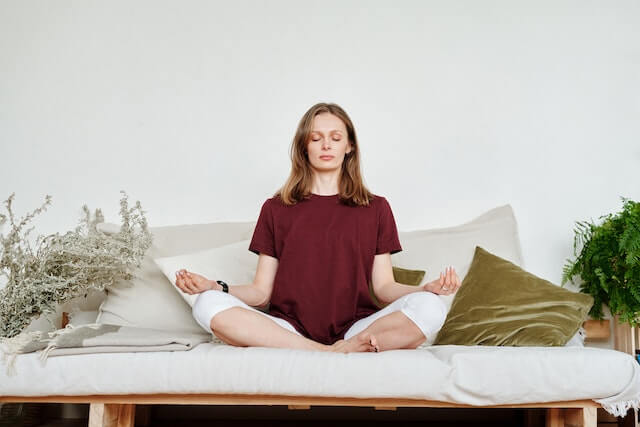
Meditation isn’t a posture competition. You don’t need to twist yourself into a pretzel or sit like a monk atop a mountain. Find a position that screams comfort to you. Maybe it’s sitting cross-legged, lounging on a recliner, or lying down like you’re about to enjoy the best nap of your life. The goal? Feeling so comfy that your body forgets it’s there.
- Setting an Intention:
Before diving in, ask yourself: “Why the heck am I doing this?” Maybe you want to de-stress, find clarity, or simply escape the kids for a few minutes. Whatever it is, set that intention. Think of it as setting a destination on your meditation GPS. It gives your session purpose and direction. And trust me, having a “why” makes the journey a whole lot smoother.
2. Breathing Techniques
Alright, let’s talk about the life of the meditation party: your breath. It’s not just about inhaling oxygen and exhaling carbon dioxide. It’s about diving deep.
- Deep Diaphragmatic Breathing
Forget those shallow chest breaths; they’re for amateurs. Aim for the diaphragm. Imagine your belly as a balloon, expanding as you inhale and deflating as you exhale. Feel the rhythm, the rise and fall. It’s like dancing but without the awkward moves.
- Counted Breaths for Focus
If your mind’s the type to wander off (thinking about dinner, weekend plans, or that embarrassing moment from years ago), give it a job. Count your breaths. Inhale for a count of four, hold for four and exhale for four. It’s like giving your brain a metronome to follow, keeping it in tune with the present moment.
3. Body Scan and Relaxation
- Progressively Relaxing Each Body Part
Imagine you’re the maestro of an orchestra, but instead of instruments, you’ve got body parts. Start at your toes. Feel them? Maybe they’re a bit twitchy from that run or still cold from those snazzy flip-flops. Now, tell them to chill out. Slowly move up to your ankles, calves, knees, and so on. It’s like you’re painting relaxation up your body, stroke by stroke. By the time you reach your head, you should feel like a well-cooked spaghetti noodle—totally limp and relaxed. And no, that doesn’t mean you’re noodling around; you’re mastering the art of relaxation.
- Letting Go of Physical Tension
We all hold onto tension, like that collection of random cords you’re sure you’ll need someday. But here’s the deal: just as you probably won’t need that cord from a 2005 Nokia, your body doesn’t need that tension. Focus on the usual suspects: the clenched jaw, the furrowed brow, the tight shoulders. Imagine each spot melting like butter on a hot pancake. Feel that tension dripping away, leaving behind a sense of lightness. It’s not just about physical relaxation; it’s about giving your body the memo that it’s safe, it’s cared for, and it can let its guard down.
4. Visualization Techniques
- Imagining Serene Landscapes or Peaceful Scenarios
Close your eyes. Now, imagine you’re in a place so serene, even your over-caffeinated coworker would chill out. Maybe it’s a beach where the only footprints are yours, and the waves whisper secrets of ancient tales. Or perhaps it’s a mountaintop where the air is crisp, and the world seems like a tiny speck below. It could even be a bustling café in Paris, where the coffee is strong, and the pastries are sinfully delicious. The point? It’s your mental escape room. No rules, no judgments. Just pure, unadulterated peace. It’s like giving your mind a mini-vacation without the hassle of packing or dealing with airport security.
- Using Guided Meditation Tools
Sometimes, steering your mind to that peaceful place is like herding cats—frustrating and nearly impossible. Enter guided meditation tools. Think of them as your meditation GPS, leading you turn by turn to relaxation town. Whether it’s an app, a YouTube video, or even a live session, these tools guide your imagination, painting vivid scenarios for you. It’s like having Morgan Freeman narrate your inner journey (or any other voice you fancy). With a guide, you’re less likely to get lost in the maze of your thoughts and more likely to reach that coveted state of zen.
5. Mantras and Affirmations
- Repeating Calming Phrases or Words
Ever had a song stuck in your head? Annoying, right? Now, imagine if that song was actually something that calmed you down. That’s what mantras are like. They’re catchy, but in a good way. Whether it’s a single word like “peace” or a phrase like “I am in control,” repeating it becomes a rhythmic anchor for your mind. It’s like your brain’s version of a lullaby, gently rocking you into a state of calm. And the best part? No annoying commercials or pop-up ads. Just pure, soothing repetition.
- The Power of Positive Affirmations in Deepening Meditation
Think of your mind as a garden. Negative thoughts? They’re the pesky weeds. Positive affirmations? They’re the seeds of beautiful flowers. When you plant these seeds through affirmations, you’re setting the stage for a mental bloom. By telling yourself things like “I am worthy” or “Every day, I grow stronger,” you’re not just being a self-love cheerleader. You’re actively rewiring your brain to focus on the positive. And in the world of meditation, that’s like adding a turbo boost. The deeper the positivity, the deeper the meditation. It’s science, sprinkled with a bit of magic.
Common Challenges in Achieving a Deep Meditative State
- Distractions and How to Overcome Them
Let’s face it, the world’s a noisy place. Whether it’s the buzz of your phone, the distant chatter of the TV, or that bird that just won’t shut up, distractions are everywhere. It’s like trying to read a book in the middle of a rock concert. But here’s the deal: you can’t always control the noise, but you can control your reaction to it. Start by creating a meditation-friendly environment. Maybe it’s noise-canceling headphones, a white noise machine, or simply closing the door. And if all else fails? Incorporate the noise into your meditation. That chirping bird? It’s now part of your serene forest visualization. Take that, distractions!
- Dealing with Restless Thoughts or Emotions
Your brain’s a chatterbox. One minute you’re focusing on your breath, the next you’re planning dinner or reliving that awkward conversation from 3 years ago. It happens. The trick isn’t to silence these thoughts, but to acknowledge them without judgment. Imagine them as clouds passing by in the sky of your mind. Notice them, nod, and let them drift away. And emotions? They’re the weather conditions. Sometimes sunny, sometimes stormy. Recognize them, feel them, but don’t let them hijack your meditation. You’re the pilot, not the passenger.
- Tips for Staying Committed to the Practice
Meditation is like going to the gym. You won’t see results overnight, and there’ll be days when you’d rather binge-watch a show than sit in silence. But consistency is key. Set a schedule, even if it’s just 5 minutes a day. Find a meditation buddy to keep you accountable. Experiment with different techniques to keep things fresh. And remember, it’s not about how long you meditate, but how consistently you do it. Think of it as building mental muscles. And trust me, the gains are worth it.
Enhancing Your Meditative State with External Aids
- Meditation Music and Binaural Beats
Think of meditation music as the soundtrack to your inner journey. It sets the mood, creates the ambiance, and gently guides your mind into the zone. Whether it’s the soft strumming of a guitar, the gentle trickle of water, or the hum of Tibetan bowls, the right tune can elevate your meditation game. And then there’s binaural beats. It’s like a gym workout for your brainwaves. By playing two slightly different frequencies in each ear, your brain perceives a third tone that helps sync your brainwaves to a desired state. It’s science meets magic. So, pop in those headphones and let the beats drop… meditatively, of course.
- Essential Oils and Aromatherapy
Ever caught a whiff of a scent and been instantly transported to a memory? That’s the power of smell. Essential oils are like nature’s little mood boosters. Lavender for relaxation, peppermint for focus, or citrus for an energy kick. A few drops in a diffuser, and you’re enveloped in an aromatic cloud that enhances your meditation. It’s like giving your senses a spa day. So, the next time you meditate, let your nose lead the way.
- Meditation Apps and Tools
In this digital age, there’s an app for everything, and meditation is no exception. Think of them as your pocket-sized meditation gurus. Guided sessions, timers, ambient sounds, and even progress trackers—these apps have got you covered. Whether you’re a newbie looking for guidance or a seasoned meditator wanting to mix things up, there’s an app out there for you. And it’s not just apps; there are smart cushions, wearable tech, and even VR meditation experiences. It’s like the future of meditation, today.
FAQs
- How long does it take to achieve a deep meditative state?
Ah, the age-old question, “Are we there yet?” The truth? It varies. For some, it’s like a quick sprint; for others, it’s a marathon. Factors like your environment, mindset, and experience play a role. But here’s the kicker: it’s not a race. Whether you dive deep in 5 minutes or 50, the journey is the reward. So, sit back, relax, and let the meditation magic happen at its own pace.
- Can beginners reach deep meditation?
Absolutely! Think of it like diving. Sure, experienced divers can go deeper faster, but even beginners can reach some pretty cool depths. The key? Patience and practice. Remember, every master was once a beginner. So, if you’re just starting out, give yourself a pat on the back. You’re on the path to some deep, meditative awesomeness.
- How often should one meditate to maintain this deep state?
Imagine meditation as a gym for your mind. You wouldn’t expect to stay fit with just one workout a month, right? Consistency is key. Whether it’s daily, every other day, or even weekly, find a rhythm that works for you. The more you flex those meditation muscles, the easier it’ll be to dive deep and stay there.
- What are the signs that I’ve reached a deep meditative state?
It’s a bit like falling in love; you’ll just know. Jokes aside, signs include a profound sense of calm, a feeling of being disconnected from your physical body, and a mind so quiet you could hear a pin drop. Time might seem to fly by, or you might lose track of it altogether. It’s a state of pure, unadulterated bliss. And trust me, once you’ve been there, you’ll want to go back again and again.
- Are there any risks associated with deep meditation?
While meditation is generally safe and beneficial, diving too deep too fast can be overwhelming. Some people report feeling disoriented or even anxious. It’s like getting the bends from surfacing too quickly while diving. The solution? Take it slow. If things get too intense, gently bring yourself back to the present. And if you have a history of mental health issues, it’s always a good idea to consult with a professional before diving deep.
Conclusion
So, we’ve journeyed through the ins and outs of diving deep into meditation. And if there’s one thing to take away, it’s this: achieving a deep meditative state isn’t just some fancy buzzword. It’s about tapping into a level of peace and clarity that’s, quite frankly, mind-blowing. It’s like discovering a secret room in your house filled with treasures.
But here’s the deal: Like any skill, it takes practice. Whether you’re a newbie or a seasoned pro, there’s always more to explore and more depths to plunge into. So, don’t get disheartened if you don’t hit the meditation jackpot right away. Keep at it, stay curious, and remember that every session, no matter how “deep” or “shallow,” is a step in the right direction.
Ready to dive deep? Your inner peace is just a breath away! So, what are you waiting for? Dive in, and let the waves of calm wash over you. Happy meditating, you zen master in the making!